
As I stood at the stove on a chilly evening, the aroma of simmering beef brisket filled my kitchen, wrapping around me like a cozy blanket. This is the magic of Korean Winter Soup—a dish crafted from rich flavors and love. With the perfect blend of tender beef, vibrant vegetables, and a spicy broth, this comfort food is a celebration of hearty meals that soothe the soul. Not only is this Korean Winter Soup a great way to warm up when the temperatures drop, but it also makes for a fantastic crowd-pleaser that everyone will enjoy. The beauty of this recipe lies in its simplicity and the ease of preparation, allowing you to create a wholesome dish without a fuss. Are you ready to dive into a bowl of warmth and discover how to make it your own?
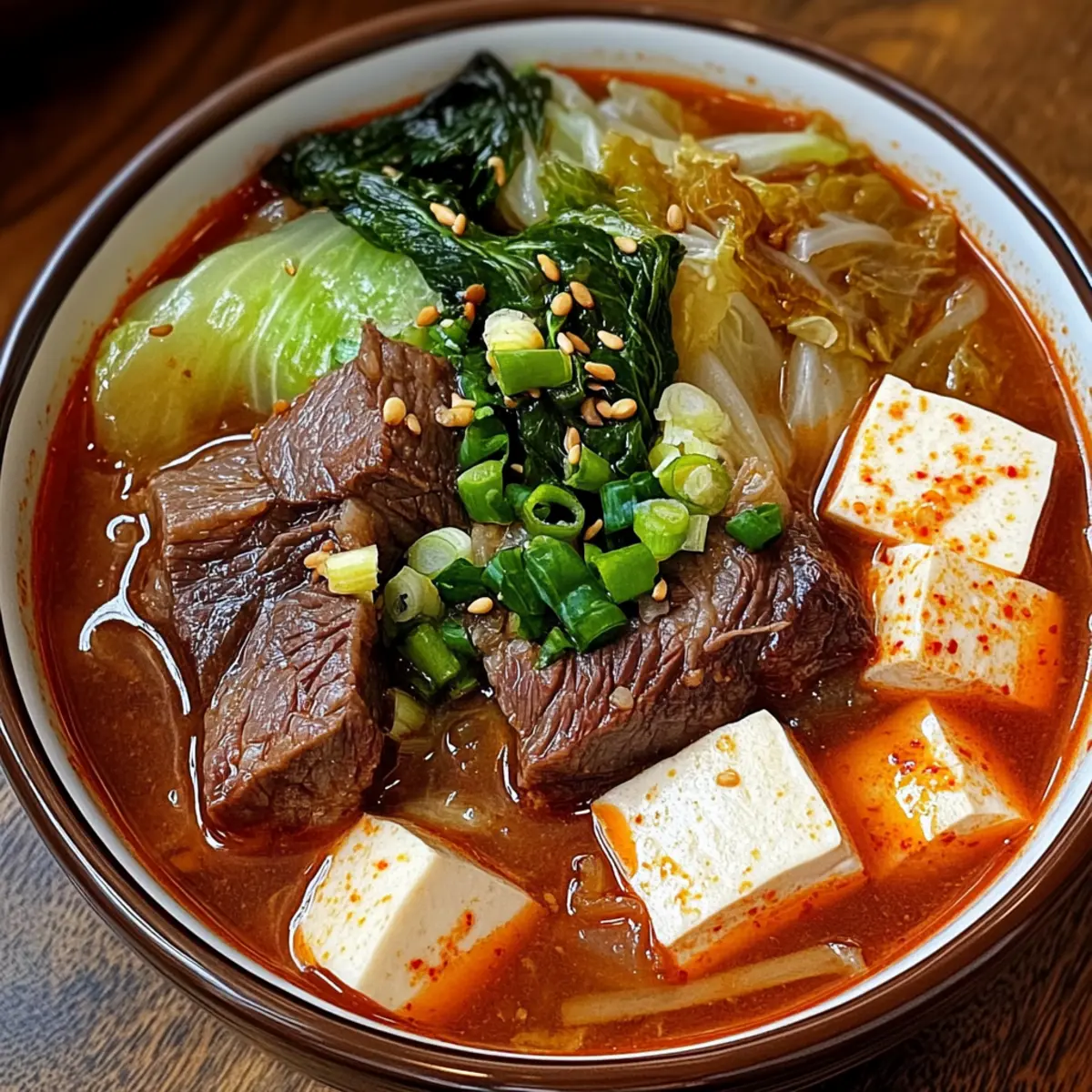
Why is Korean Winter Soup a must-try?
Soul-warming Comfort: This Korean Winter Soup wraps you in warmth and flavor, making it ideal for cold nights.
Flavorful Depth: With a blend of savory beef brisket, rich spices, and fresh vegetables, every sip is a hug in a bowl.
Easy to Prepare: Simple ingredients come together effortlessly, perfect for both beginner cooks and seasoned chefs.
Crowd-Pleasing Delight: Whether it’s family dinner or a cozy gathering, this soup impresses and satisfies every palate.
Versatile Options: Customize it with your favorite veggies or proteins, keeping it exciting and fresh every time you make it! For more hearty inspiration, don’t miss out on our Chicken Enchilada Soup or Lemon Chicken Soup.
Korean Winter Soup Ingredients
For the Broth
- Beef Brisket – Adds a rich, robust flavor to the Korean Winter Soup; substitute with chuck roast or short ribs for variations in taste.
- Water – Forms the base of the broth, infusing flavor as it simmers.
- Soy Sauce – Provides umami depth and balances the sweetness of the fresh vegetables.
- Gochujang (Korean Red Pepper Paste) – Introduces a spicy-sweet kick and vibrant color; can be substituted with miso and a touch of chili powder.
- Gochugaru (Korean Red Pepper Powder) – Offers smoky heat enhancing the richness of the soup; can be swapped with crushed red pepper flakes based on your spice preference.
- Garlic – Delivers aromatic depth that enhances the overall savoriness of the broth.
- Onion – Sweetens the soup and contributes to a complex flavor profile.
- Salt and Pepper – To taste, ensuring the soup’s flavor is perfectly balanced.
For the Vegetables
- Napa Cabbage – Adds a refreshing texture and mild sweetness; you can substitute with bok choy or regular cabbage.
- Firm Tofu – Provides protein and a soft texture; can be replaced with additional vegetables for a vegetarian version.
- Daikon Radish – Offers a crisp, sweet contrast; can swap this with regular radish or carrots.
- Green Onions – Used as a garnish for added freshness and visual appeal.
For Serving
- Sesame Oil – Adds a nutty aroma and flavor; essential for sautéing green onions.
- Cooked White Rice – Serves as a perfect accompaniment, ideal for soaking up the rich broth.
Get ready to feel the warmth of this Korean Winter Soup as you gather these delightful ingredients!
Step‑by‑Step Instructions for Korean Winter Soup
Step 1: Simmer the Beef
In a large pot, place the beef brisket and add enough water to cover it. Bring the mixture to a rolling boil over medium-high heat, then reduce the heat to low. Let it simmer gently for about 30 minutes, or until the brisket is tender and easily pierced with a fork, creating a flavorful base for your Korean Winter Soup.
Step 2: Skim Impurities
While the brisket simmers, periodically skim off any impurities or foam that rises to the surface using a ladle or spoon. This process is crucial as it helps achieve a clear broth. Continue to monitor the pot, ensuring that the heat remains low to avoid boiling, which can cloud the broth.
Step 3: Add Flavor Ingredients
Once the beef is tender, stir in soy sauce, gochujang, gochugaru, and minced garlic. Make sure to mix well so that the gochujang dissolves completely into the broth, infusing it with a deep, spicy flavor. Let the soup simmer for an additional 5 minutes, allowing the spices to meld beautifully.
Step 4: Incorporate Vegetables
Next, add the chopped onion, napa cabbage, firm tofu, and daikon radish to the pot. Stir well to combine, and then cover the pot. Let the ingredients simmer for another 20 minutes, until the vegetables become soft and tender. This step enriches the Korean Winter Soup with colorful textures and vibrant flavors.
Step 5: Sauté and Combine
In a small skillet, heat sesame oil over medium heat. Add the sliced green onions and sauté for about 2 minutes until they become fragrant and slightly tender. Once done, mix the sautéed green onions into the Korean Winter Soup, enhancing its aroma and depth.
Step 6: Season to Taste
Taste your soup and adjust the seasoning with salt and pepper according to your preference. This step is essential to ensure that each spoonful is balanced and full of flavor. If needed, let it simmer for an additional 5 minutes to blend the adjusted seasonings thoroughly.
Step 7: Serve
Ladle the hearty Korean Winter Soup into warm bowls. Serve it hot with a generous side of cooked white rice so everyone can soak up the delicious broth. Garnish with extra green onions if desired, and enjoy the wonderful warmth of this comforting dish with your loved ones!
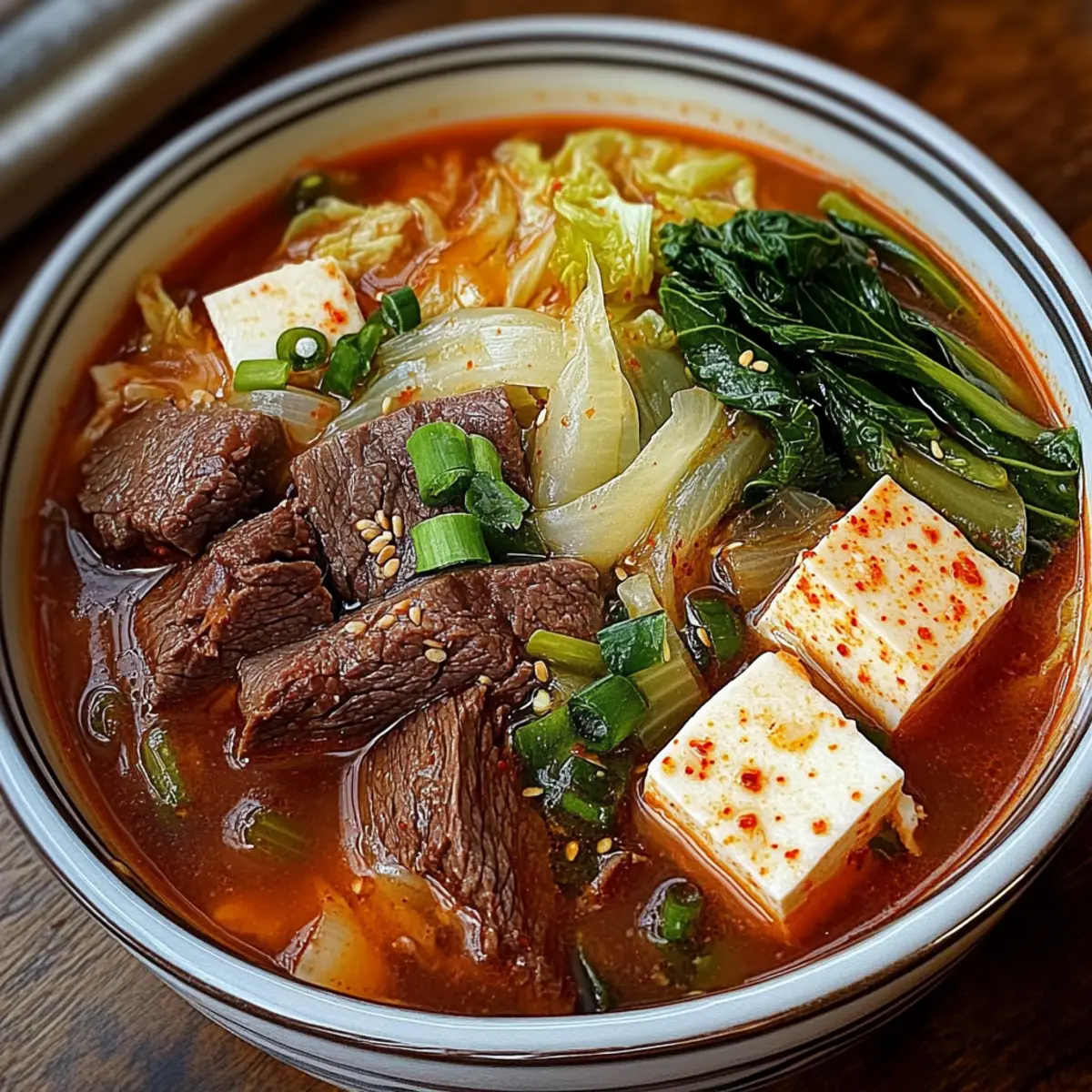
Make Ahead Options
Korean Winter Soup is a wonderful candidate for make-ahead meal prep! You can prepare the entire soup base up to 24 hours in advance. To do this, follow the initial steps of simmering the beef and adding the flavor ingredients, then refrigerate the soup without the vegetables and final seasonings. When you’re ready to serve, simply reheat the soup on the stove and add your chopped vegetables (napa cabbage, daikon radish, tofu). Simmer until the vegetables are tender, seasoning to taste. This method ensures you enjoy a delicious, comforting soup that’s just as hearty and rich, saving you precious time during busy weeknights!
What to Serve with Korean Winter Soup
Set the stage for an unforgettable meal with delightful pairings that elevate your comforting Korean Winter Soup experience.
- Steamed Jasmine Rice: The perfect accompaniment for soaking up the flavorful broth, enhancing every spoonful of your satisfying soup.
- Kimchi: This tangy, spicy fermented side adds a crunchy contrast and a depth of flavor that complements the warmth of your soup.
- Asian Pickled Vegetables: A zesty addition that provides a crisp and refreshing bite, balancing the hearty richness of the soup beautifully.
- Garlic Naan: Soft and chewy, this bread is excellent for scooping up the soup, creating a delightful fusion of flavors.
- Cucumber Salad: A bright, crunchy side that refreshes your palate between each warm and savory bite of the soup, enhancing your dining experience.
- Sesame Spinach Salad: Lightly seasoned with sesame oil, this dish adds a nutritious green element, providing balance to the hearty soup.
- Hot Green Tea: A soothing beverage that cleanses the palate and complements the savory depth of the Korean Winter Soup without overpowering its flavors.
- Chocolate Mochi: For a sweet finish, this delightful treat brings a chewy and mildly sweet experience that turns your meal into a memorable feast.
- Sliced Apples with Honey: Crisp and sweet apples add a refreshing contrast that balances the spicy richness of the soup, making for a delightful dessert option.
Korean Winter Soup: Personalize It!
Feel free to put your own twist on this warming Korean Winter Soup so it matches your family’s taste perfectly.
- Chicken Alternative: Replace beef brisket with chicken thighs for a lighter version while keeping that hearty flavor.
- Vegetarian Delight: Swap in hearty vegetables like mushrooms, zucchini, and a variety of beans to create a nourishing vegetarian soup.
- Spicy Kick: Increase the gochujang and gochugaru to bring on the heat. A hint of fresh ginger can also add an exciting layer of flavor!
- Extra Greens: Toss in some kale or spinach near the end for added nutrition and vibrant color.
- Savory Umami Boost: Add a splash of fish sauce or some shiitake mushrooms to deepen the umami profile of the broth.
- Rice Variations: Instead of white rice, serve it over quinoa or cauliflower rice for a low-carb twist that still satisfies.
- Seasonal Vegetables: Get creative with seasonal swaps! In spring, try adding peas and asparagus, while in autumn, root veggies can shine beautifully.
- Comfort Sidekick: Serve with crunchy kimchi or side pickles to enhance flavors and add a refreshing contrast to the soup’s warmth.
Get inspired! The world of flavors is at your fingertips, just like with our delightful Sweet Spicy Korean recipe! Enjoy the journey of creating a comforting favorite that feels like home, no matter how you customize it.
Expert Tips for Korean Winter Soup
-
Tender Brisket: Simmer the beef brisket long enough—around 30 minutes—to achieve that melt-in-your-mouth tenderness essential for a delicious Korean Winter Soup.
-
Skim Wisely: Don’t skip skimming the impurities while simmering. This step ensures a clear and clean broth that looks as good as it tastes.
-
Season Gradually: Taste your broth as you go! Adjust the soy sauce and spices to suit your personal preference while ensuring each element shines through in the flavor.
-
Veggie Variability: Feel free to mix in your favorite or seasonal vegetables. Just remember to add hearty ones early on while quicker-cooking veggies can go in later.
-
Reheat Right: If you have leftovers, gently reheat on the stove rather than the microwave to keep the textures of your Korean Winter Soup intact without overcooking the ingredients.
How to Store and Freeze Korean Winter Soup
Fridge: Store leftover Korean Winter Soup in an airtight container for up to 3 days to retain its rich flavors.
Freezer: For longer storage, freeze the soup in freezer-safe containers for up to 3 months. To prevent freezer burn, ensure the containers are tightly sealed.
Reheating: When you’re ready to enjoy this comforting dish again, thaw it overnight in the fridge, then gently reheat on the stove, adding a splash of water to maintain consistency if needed.
Cooling: Before refrigerating or freezing, allow the soup to cool to room temperature to prevent moisture buildup in the storage container.
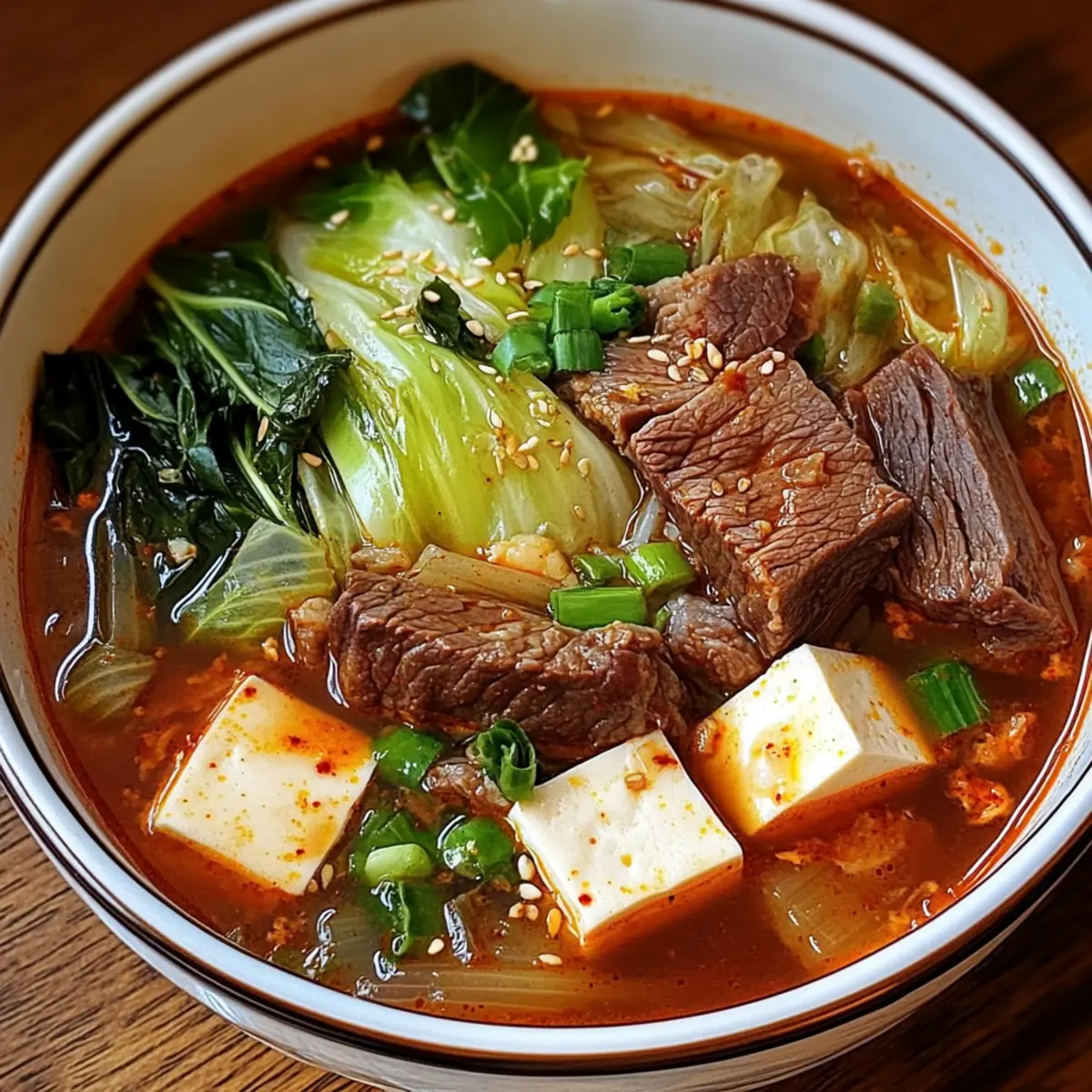
Korean Winter Soup Recipe FAQs
How do I choose the best beef brisket for my Korean Winter Soup?
Absolutely! Look for brisket that is bright pink with a good amount of marbling—this fat will render during cooking and add flavor. Avoid pieces with dark spots or excessive dryness. Fresh cuts should feel firm yet slightly springy to the touch.
How should I store leftovers of my Korean Winter Soup?
Store your leftover Korean Winter Soup in airtight containers in the refrigerator for up to 3 days. Just make sure it has cooled down to room temperature before sealing. When you’re ready to enjoy it again, reheat gently over medium heat on the stove, adding a little water if you want to adjust the consistency.
Can I freeze Korean Winter Soup, and how do I do it properly?
Very! To freeze your Korean Winter Soup, let it cool completely before pouring it into freezer-safe containers. Make sure to leave some space at the top, as the soup will expand when frozen. It can be kept in the freezer for up to 3 months. When you’re ready to eat, thaw in the refrigerator overnight, then reheat gently on the stove.
What if my soup is too spicy?
No worries! If you find your Korean Winter Soup too spicy, there are a couple of quick fixes. You can add more water or broth to dilute the spiciness, which will also lighten the flavor a bit. Alternatively, stir in some coconut milk or cream to mellow out the heat without compromising taste.
Are there any dietary considerations I should be aware of?
Yes, definitely! If you’re making Korean Winter Soup for others, inquire about allergies or dietary restrictions. The recipe contains soy sauce and tofu, which may be an issue for those with soy allergies. For gluten-free versions, opt for a gluten-free soy sauce. Additionally, you can swap out the meat for an array of vegetables, making it a delightful vegetarian option!
How do I know when the beef brisket is perfectly tender?
To ensure your beef brisket achieves that melt-in-your-mouth tenderness, you should simmer it low and slow for about 30 minutes. Use a fork to test for tenderness; it should easily pull apart with gentle pressure. If it feels tough or resistant, let it simmer for an additional 10-15 minutes, checking periodically. Enjoy your cooking adventure!
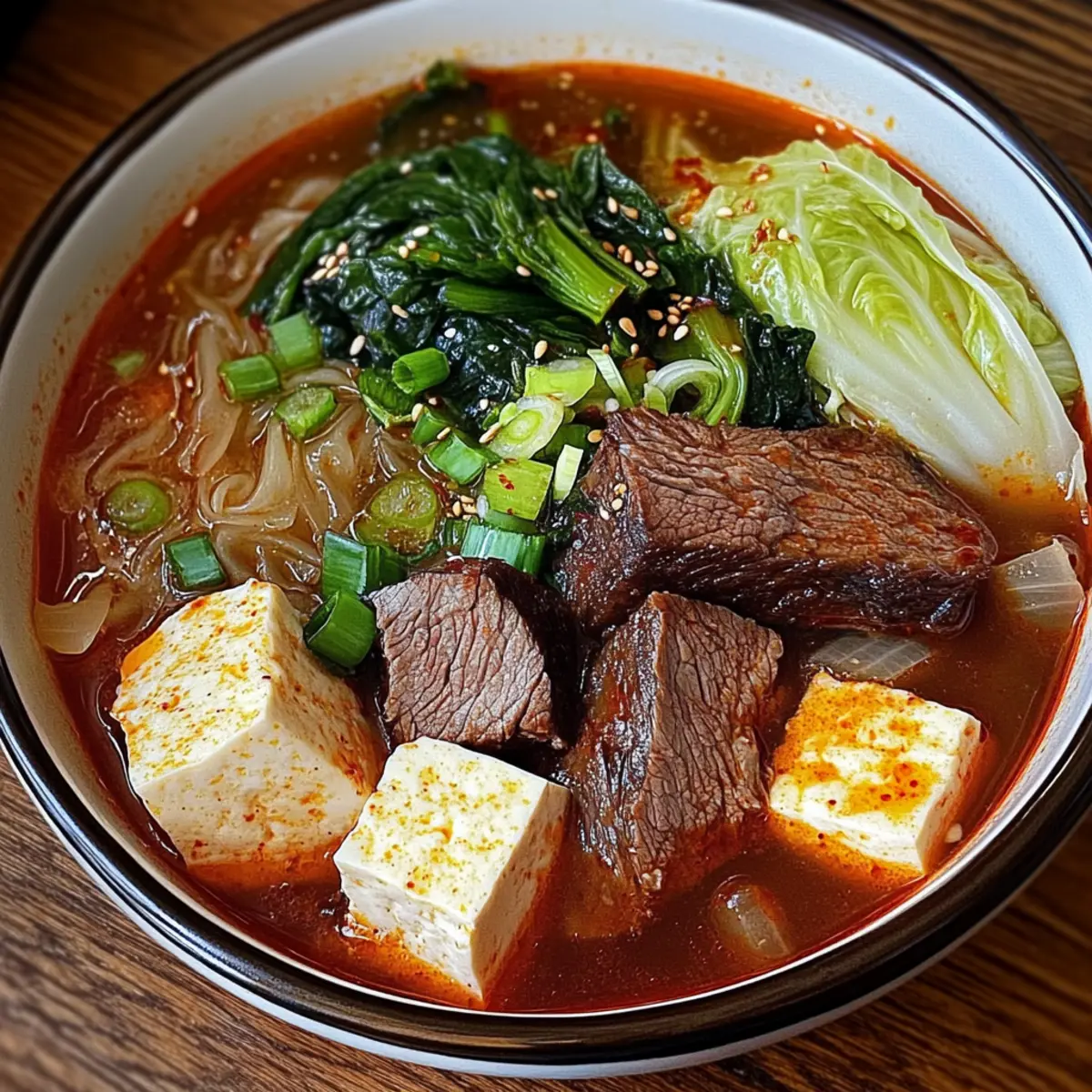
Korean Winter Soup: Cozy Up with This Hearty Bowl of Comfort
Ingredients
Equipment
Method
- In a large pot, place the beef brisket and add enough water to cover it. Bring to a rolling boil, then reduce heat to low and simmer for about 30 minutes, or until tender.
- While simmering, skim off any impurities or foam that rises to the surface using a ladle. This helps achieve a clear broth.
- Add soy sauce, gochujang, gochugaru, and minced garlic once the beef is tender, stir to dissolve gochujang, and simmer for additional 5 minutes.
- Add chopped onion, napa cabbage, firm tofu, and daikon radish to the pot. Cover and let simmer for another 20 minutes.
- In a skillet, heat sesame oil over medium heat. Add sliced green onions and sauté for about 2 minutes. Stir into soup.
- Taste and adjust seasoning with salt and pepper. Simmer for an additional 5 minutes if needed.
- Ladle the soup into bowls and serve hot with cooked white rice and extra green onions if desired.
Leave a Reply