
The moment you take your first bite of jjolmyeon, the unique chewiness transports you straight to the vibrant streets of Korea, where delicious flavors dance in the air. These Spicy Chewy Noodles are irresistibly tossed in a sweet and tangy gochujang sauce, creating a delightful balance of heat and sweetness that keeps you coming back for more. Not only are they a brilliant option for quick weeknight dinners, but these cold noodles are also perfect for warm days, making your plate a canvas of fresh vegetables. As you dive into this recipe, you’ll discover a crowd-pleaser that’s not only delicious but also completely customizable to fit your dietary needs. Ready to spice up your dinner routine? Let’s get started!
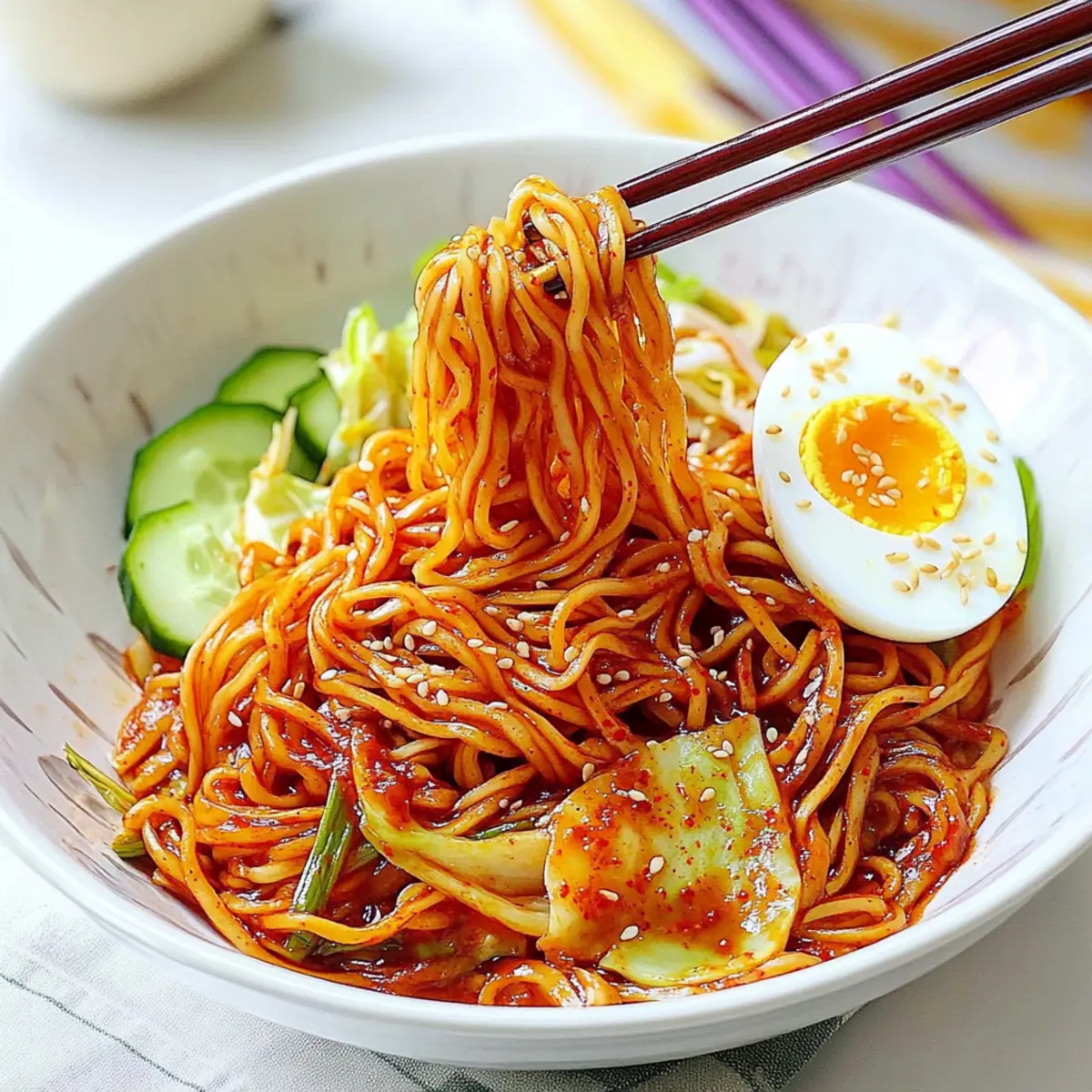
Why is Jjolmyeon so irresistible?
Bold flavors collide in every bite of jjolmyeon, creating an enchanting dance of taste. Quick and easy to prepare, this dish is perfect for busy weeknights when you crave something delicious. Versatile and customizable, you can tweak the ingredients to suit your dietary needs or preferences! Refreshing on hot days, it makes a fantastic choice for picnics or gatherings. Looking for something sweet to finish off? Try pairing it with my delightful Soft Chewy Cinnamon cookies!
Jjolmyeon Ingredients
Unleash the deliciousness of your own homemade bowl!
For the Noodles
• Jjolmyeon (14 ounces) – This is your main ingredient, providing that delightful chewiness; look for fresh or frozen options.
For the Vegetables
• Kongnamul (Soybean Sprouts, 6 ounces) – These add a satisfying crunch and nutrition; bean sprouts can be a good substitute.
• Green Cabbage (3 ounces) – Offers a crisp texture; feel free to switch to red cabbage for a pop of color.
• Red Cabbage (1 ounce, optional) – Enhances color and adds more crunch to your dish.
• Carrot (1/2) – Brings sweetness and vibrant color; cut into matchsticks for easy eating.
• Cucumber (1/2 small) – Adds refreshing notes; zucchini can be used instead for a twist.
• Hard Boiled Egg (1) – Adds protein and richness; you can skip it for a vegan-friendly option.
For the Sauce
• Gochugaru (1 tablespoon, preferably finely ground) – This spice adds a flavorful kick; adjust to your preferred spice level.
• Gochujang (2 tablespoons) – The star of the sauce, bringing that unique depth and sweetness to your jjolmyeon.
• Corn Syrup (1 tablespoon, oligodang) – A touch of sweetness; honey or agave syrup can serve as alternatives.
• Sugar (1 tablespoon) – Balances the flavors; feel free to tweak depending on your taste.
• Vinegar (2 tablespoons) – Provides a tangy kick; rice vinegar is the way to go!
• Soy Sauce (1 tablespoon) – Enhances umami flavor; tamari works for a gluten-free option if needed.
• Pineapple Juice (2 tablespoons) or Maesilcheong – Leverage fruity sweetness; apple juice or lemon soda can be suitable substitutes.
• Minced Garlic (1 teaspoon) – Adds depth to the sauce; optional if you need to avoid raw garlic.
• Sesame Seeds (1 tablespoon, preferably finely ground) – Offer a nutty flavor and can be left whole for garnish.
• Salt (pinch) – A little for rounding out and enhancing the overall flavor profile.
• Sesame Oil (1 tablespoon) – Delivers a lovely nutty aroma; use sparingly to avoid overpowering the other flavors.
With these jjolmyeon ingredients, your homemade spicy chewy noodles are just a delightful recipe away!
Step‑by‑Step Instructions for Jjolmyeon (Spicy Chewy Noodles)
Step 1: Prepare the Sauce
In a small bowl, combine 2 tablespoons of gochujang, 1 tablespoon of corn syrup, 1 tablespoon of sugar, 2 tablespoons of vinegar, 1 tablespoon of soy sauce, 2 tablespoons of pineapple juice, and 1 teaspoon of minced garlic. Whisk together until smooth and well-blended. Set aside to let the flavors marry while you work on the other components of your jjolmyeon.
Step 2: Cook the Soybean Sprouts
Bring a medium pot of water to a rolling boil over high heat. Once boiling, add 6 ounces of kongnamul (soybean sprouts) and cook for about 3-4 minutes, until they’re tender but still crisp. After cooking, transfer the sprouts to a bowl of ice water to stop the cooking process, then drain them well before setting aside.
Step 3: Prep the Vegetables
While the soybean sprouts cool, wash and chop your vegetables. Thinly slice 3 ounces of green cabbage and, if using, 1 ounce of red cabbage for added color. Cut half a carrot into matchsticks and slice half a small cucumber into thin strips. Arrange them in a colorful mix that will add freshness to your jjolmyeon.
Step 4: Cook the Noodles
In a large pot, bring water to a boil. Add 14 ounces of jjolmyeon and cook according to the package instructions—usually about 5 minutes. As the noodles cook, stir occasionally to prevent sticking. Once they are chewy yet tender, drain the noodles and rinse under cold water until they are cool and firm to the touch, helping achieve that perfect jjolmyeon texture.
Step 5: Assemble the Dish
In a large serving bowl, place the cooled jjolmyeon noodles. Add the prepared soybean sprouts, sliced cabbages, carrot matchsticks, and cucumber strips on top of the noodles, creating a vibrant presentation. Drizzle the prepared gochujang sauce over the noodles and vegetables, or serve it on the side for dipping. For a final touch, garnish with half a hard-boiled egg, if desired, adding protein and a lovely finishing note to your jjolmyeon.
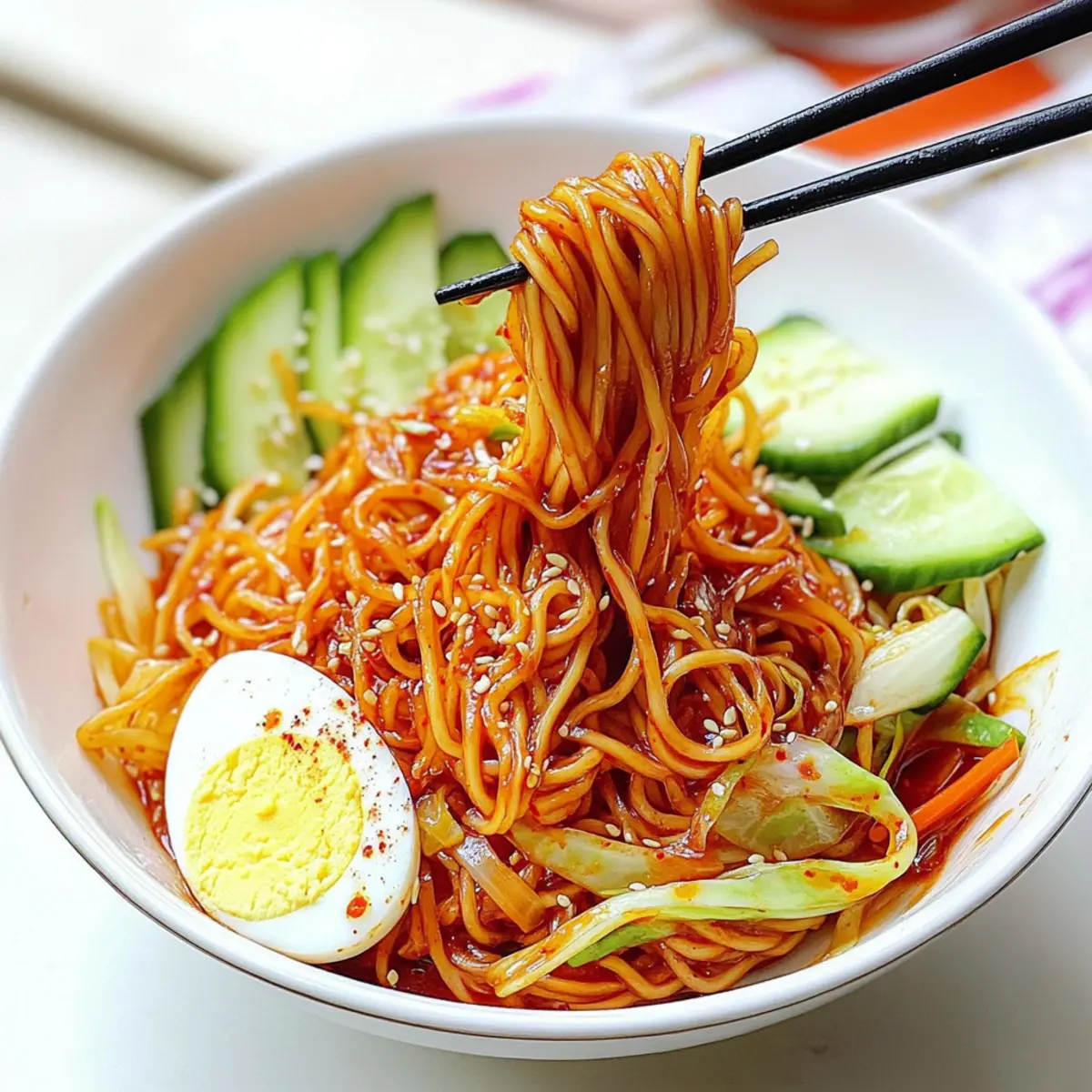
What to Serve with Jjolmyeon (Spicy Chewy Noodles)
Elevate your dining experience with delightful sides and drinks that complement the vibrant flavors of this Korean classic.
-
Crispy Prawn Chips: These airy, crunchy snacks add a delightful texture contrast while balancing the spiciness of the jjolmyeon. Perfectly addictive for nibbling!
-
Korean Pickled Radish: With its tangy crunch, this refreshing side provides a perfect palate cleanser between bites of spicy jjolmyeon, enhancing your overall experience.
-
Fresh Asian Slaw: Tossed with a light sesame dressing, this bright blend of vegetables brings a crisp, fresh dimension that perfectly mirrors the crunch of your noodles.
-
Chilled Soba Noodles: These nutty-flavored, cold noodles provide a pleasant excuse for a delightful texture contrast while balancing the heat from the jjolmyeon. They marry well with some soy dipping sauce!
-
Spicy Tofu Bites: Add a protein punch with crispy spicy tofu that echoes the flavors within your jjolmyeon, offering both heartiness and zest in every bite.
-
Iced Green Tea: Serve this refreshing drink to cool off the palate while enhancing the meal’s delicate flavors with its subtle aroma and light sweetness.
-
Honeydew Melon Balls: End your meal on a sweet note with these juicy, cool bites that cleanse the palate and provide a refreshing finish against the savory spiciness of the jjolmyeon.
Expert Tips for Jjolmyeon
-
Rinse Thoroughly: Always rinse the noodles under cold water for a few minutes to achieve that signature chewy texture; this prevents them from becoming mushy.
-
Taste Test the Sauce: Adjust the gochujang and sugar to suit your palate for a perfect balance of spiciness and sweetness in your jjolmyeon sauce.
-
Season Gradually: When adding sesame oil, start with less; it can easily overpower the dish if used in excess, altering the delicate flavors.
-
Chill before Serving: Let the assembled jjolmyeon chill in the fridge for 15-30 minutes before serving to enhance the refreshing experience, especially on warm days.
-
Experiment with Veggies: Don’t hesitate to incorporate seasonal or available vegetables like bell peppers or zucchini, making your jjolmyeon even more vibrant and nutritious!
-
Storage Reminder: Enjoy your jjolmyeon fresh; if storing, add a splash of sauce before eating to revive the flavors, as the noodles can absorb moisture.
Make Ahead Options
These Spicy Chewy Jjolmyeon noodles are perfect for meal prep enthusiasts! You can prepare the sauce and vegetables up to 24 hours in advance, allowing the flavors to deepen and saving you time on busy weeknights. Simply mix the gochujang sauce ingredients in a bowl and store it in an airtight container in the fridge. For the vegetables, wash, chop, and refrigerate them in a separate container. When you’re ready to serve, cook the jjolmyeon noodles and rinse them under cold water to achieve that ideal chewiness. Toss everything together, and you’ll have a delightful meal ready in no time, just as delicious as when made fresh!
Jjolmyeon Variations & Substitutions
Feel free to get creative with your jjolmyeon! Let’s explore some fun ways to tweak the recipe for your unique taste buds.
-
Noodle Swap: Substitute jjolmyeon with soba noodles for a nutty flavor or rice noodles for gluten-free options.
-
Protein Boost: Add tofu for a vegetarian protein source or grilled chicken for a heartier meal that stays flavorful and filling.
-
Crispy Additions:Top your dish with fried shallots or crispy chickpeas for that satisfying crunch that complements the chewy noodles wonderfully.
-
Seasonal Veggies: Incorporate bell peppers or radishes, bringing fresh colors and tastes to enhance your jjolmyeon, making it even more delightful.
-
Less Heat: For a milder experience, reduce the gochugaru to your liking or use sweet chili sauce instead, maintaining that balance of sweet and spicy with less kick.
-
Tangy Twist: Swap in yuzu juice for the vinegar for a unique citrusy zing that heightens the dish’s refreshing aspects.
-
Vegan Delight: Omit the hard-boiled egg to turn your dish completely vegan while still being satisfying and delightful.
-
Saucy Adventure: Experiment by adding peanut butter to your gochujang sauce for an intriguing, creamy texture and a comforting nutty sweetness.
Try these variations to make your jjolmyeon your own! For dessert, pair it with some delightful Soft Chewy Cinnamon cookies!
How to Store and Freeze Jjolmyeon
Fridge: Store leftover jjolmyeon in an airtight container in the refrigerator for up to 2 days. The noodles may soften, so consider adding extra sauce before serving.
Freezer: While freezing is not ideal due to texture changes, you can freeze the assembled dish for up to 1 month. Reheat gently, adding a splash of water to the noodles for moisture.
Reheating: For best results, reheat jjolmyeon in a skillet over low heat with a bit of water to revive chewiness and flavor.
Room Temperature: If you need to serve jjolmyeon outdoors or at a gathering, keep it chilled in a cooler for up to 2 hours to maintain its refreshing quality.
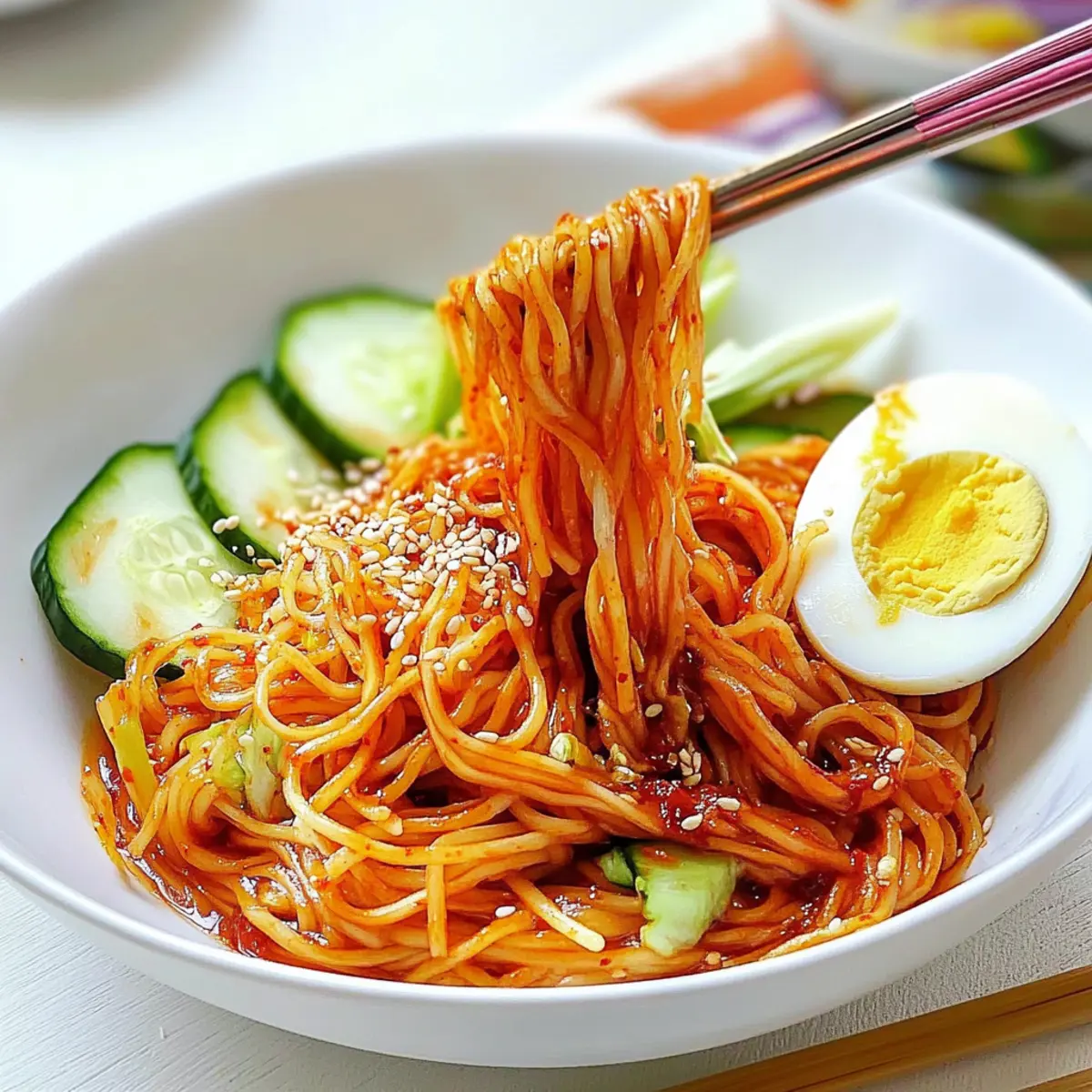
Jjolmyeon (Spicy Chewy Noodles) Recipe FAQs
What is the best way to select ripe vegetables for my jjolmyeon?
Absolutely! When selecting vegetables like cabbage or cucumber, look for vibrant colors and crisp textures. Avoid any that have dark spots or wilting. Fresh kongnamul (soybean sprouts) should be firm and crunchy, ensuring a delightful bite in your dish.
How should I store leftover jjolmyeon?
Leftover jjolmyeon can be stored in an airtight container in the refrigerator for up to 2 days. However, be prepared that the noodles might soften. Adding extra sauce before serving can help revive the flavors and texture, keeping your meal enjoyable!
Can I freeze jjolmyeon for later use?
While freezing isn’t ideal due to potential texture changes, you can freeze assembled jjolmyeon for up to 1 month. To do this, place it in an airtight container and ensure it’s well-sealed. When you’re ready to enjoy, thaw in the fridge overnight and reheat gently in a skillet over low heat, adding a splash of water to restore moisture.
What should I do if my jjolmyeon noodles become too soft?
The more the merrier! If your noodles turn out too soft, don’t fret. You can gently sauté them in a skillet on low heat with a bit of water to regain some chewiness. This way, they become more enjoyable and less mushy!
Are there any dietary considerations for jjolmyeon?
Certainly! To make jjolmyeon suitable for vegans, simply skip the hard-boiled egg or replace it with another protein source like tofu. If you have allergies, double-check that your soy sauce and gochujang are gluten-free, and always read labels to avoid potential allergens.
Can I adjust the spice level in the sauce?
Very much so! It’s easy to customize your sauce for jjolmyeon. Start by adding a smaller amount of gochugaru or gochujang, then taste and adjust according to your heat preference. This way, you can enjoy a delicious meal that suits your palate!
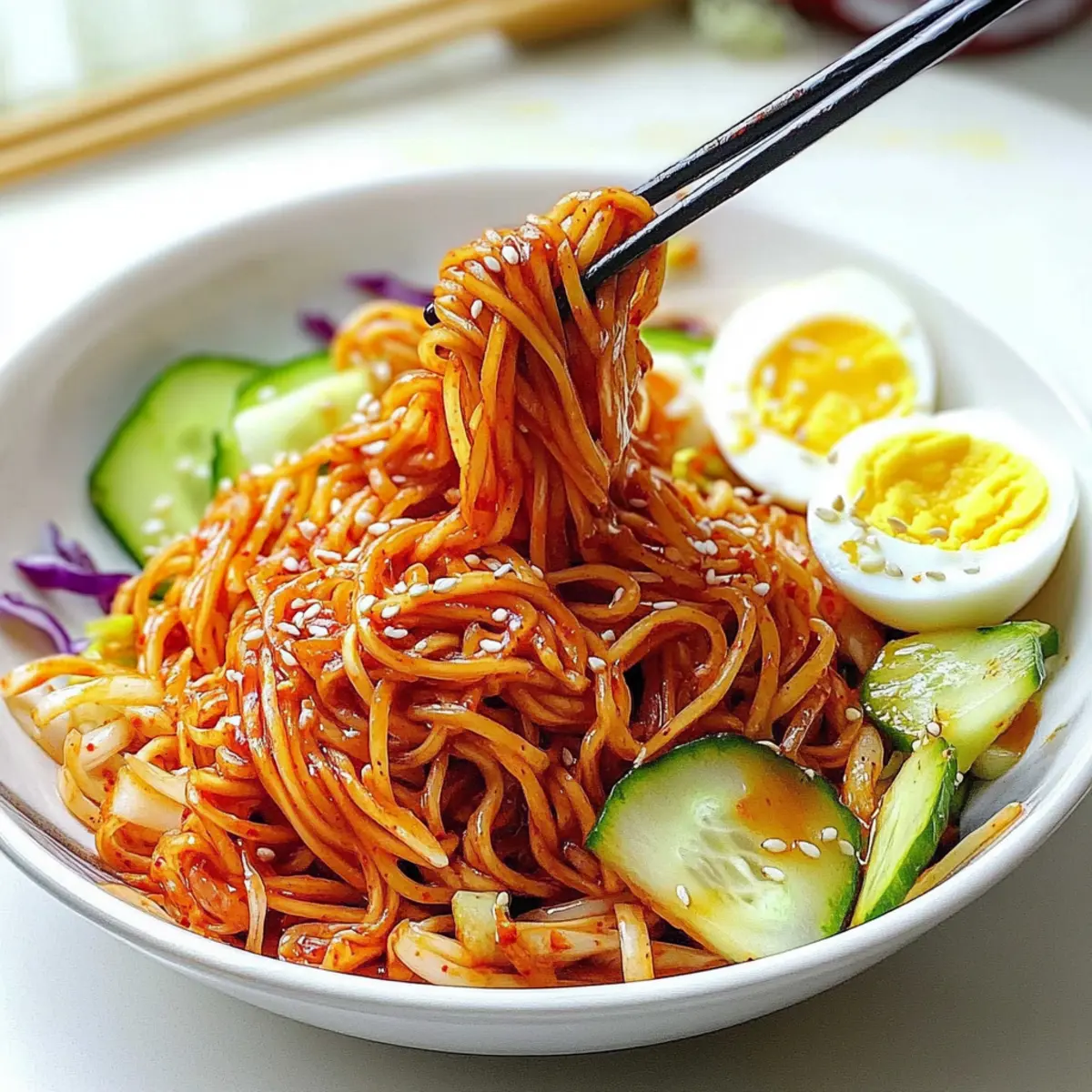
Spicy Chewy Jjolmyeon Noodles in Tangy Gochujang Sauce
Ingredients
Equipment
Method
- In a small bowl, combine gochujang, corn syrup, sugar, vinegar, soy sauce, pineapple juice, and minced garlic. Whisk until smooth and set aside.
- Bring a medium pot of water to a rolling boil. Add soybean sprouts and cook for 3-4 minutes until tender. Transfer to ice water, then drain.
- Wash and chop vegetables: slice green and red cabbage, cut carrot into matchsticks, and cucumber into strips.
- In a large pot, boil water. Add jjolmyeon and cook for about 5 minutes. Drain and rinse under cold water.
- In a large bowl, place cooled noodles, then top with soybean sprouts, cabbages, carrot, and cucumber. Drizzle with gochujang sauce or serve on the side. Garnish with hard-boiled egg if desired.
Leave a Reply