
As I stood in my kitchen, the warm scent of toasted coconut wafting through the air instantly transported me to a sun-soaked tropical paradise. The star of my culinary adventure today was Coconut Crusted Salmon with Pineapple Salsa, a dish that beautifully marries the rich, buttery flavor of salmon with the sweet and tangy burst of fresh pineapple. Not only is this recipe visually stunning, but it also offers a healthy and easy weeknight dinner that packs a flavor punch! The delightful crunch of the coconut crust combined with the vibrancy of the pineapple salsa makes every bite a celebration. Ready to impress your loved ones with this simple yet elegant meal? Let’s dive into how to create this tropical masterpiece together!
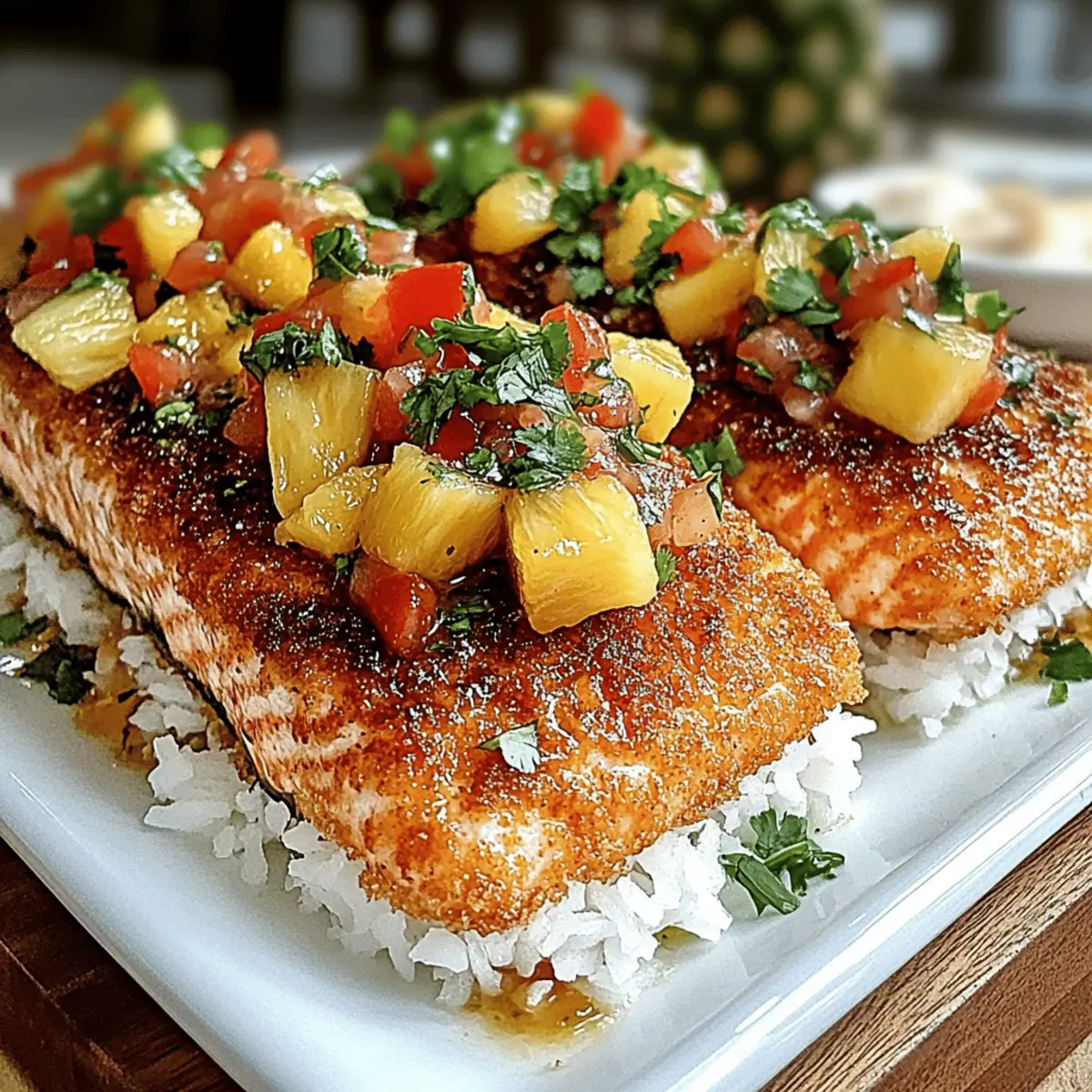
Why is Coconut Crusted Salmon a Must-Try?
Flavor Explosion: The tropical fusion of coconut and pineapple brings a burst of color and taste to your plate that’s perfect for summer evenings.
Ease of Preparation: With simple ingredients and quick prep time, this dish is designed for busy weeknights without sacrificing quality.
Health Benefits: Packed with omega-3s from salmon, this recipe promotes heart health while staying gluten-free if you opt for gluten-free breadcrumbs.
Eye-Catching Presentation: The crispy coating paired with vibrant salsa isn’t just delicious—it looks stunning too, making it a great choice for entertaining.
Versatile Pairing: Serve your salmon with jasmine rice or a light salad, making it adaptable to your family’s preferences.
Looking for more seafood inspiration? Don’t miss the Savory Salmon Tartare or have a go at the Coconut Salmon Curry for delightful twists on fish dishes!
Coconut Crusted Salmon Ingredients
• Note: Gather these key ingredients to create your Coconut Crusted Salmon with Pineapple Salsa.
For the Salmon
- Salmon – The star ingredient loaded with protein and omega-3s; wild-caught is best for flavor.
- Unsweetened Shredded Coconut – Adds a crunchy texture and tropical flavor; use finely grated coconut for a smoother crust.
- Panko Breadcrumbs – Provides an extra crispy texture; opt for gluten-free panko to keep it a gluten-free dish.
- All-Purpose Flour – Helps the crust adhere; substitute with cornstarch for those avoiding gluten.
- Large Eggs – Binds the crust together; for a vegan option, mix flaxseed meal with water.
- Salt and Pepper – Essential for enhancing the dish’s flavor; adjust to your personal taste.
- Coconut Oil (or Olive Oil for Baking) – Keeps salmon moist when frying; avocado oil is a suitable substitute.
For the Pineapple Salsa
- Fresh Pineapple – Adds sweetness and acidity; swap with mango for a different tropical flair.
- Red Bell Pepper – Brings crunch and color; any sweet bell pepper can work here.
- Red Onion – Provides sharpness; green onions can be used if you prefer a milder flavor.
- Jalapeño (optional) – Introduces a delightful kick; omit if you’re looking for a milder salsa.
- Lime Juice – Brightens up the flavors; always opt for fresh for the best taste.
- Fresh Cilantro – Delivers a burst of freshness; feel free to skip it if cilantro isn’t your favorite.
Now that you have all the ingredients lined up, you’re just a step away from creating a delicious and healthy Coconut Crusted Salmon with Pineapple Salsa!
Step‑by‑Step Instructions for Coconut Crusted Salmon with Pineapple Salsa
Step 1: Prepare the Pineapple Salsa
Begin by dicing fresh pineapple, red bell pepper, and red onion, then finely chop the jalapeño if using. In a medium bowl, mix all the chopped ingredients together and squeeze in fresh lime juice. Season with salt to taste, and stir well to combine. Allow the salsa to sit for 15-20 minutes at room temperature, letting the flavors meld beautifully while you prepare the Coconut Crusted Salmon.
Step 2: Preheat the Oven or Skillet
For the perfect Coconut Crusted Salmon, preheat your oven to 400°F (200°C) if you’re baking. Alternatively, if you prefer frying, heat a large skillet over medium heat and add enough coconut oil (or olive oil) to generously coat the bottom. Aim for a slight shimmer in the oil, which indicates it’s hot enough for frying, ensuring a crispy crust.
Step 3: Set Up Breading Station
Organize your ingredients by setting up a breading station. In one shallow bowl, place all-purpose flour (or cornstarch for gluten-free). In another, beat a couple of large eggs. Finally, in a third bowl, combine unsweetened shredded coconut and panko breadcrumbs. This step is crucial for crafting the perfect coating for your Coconut Crusted Salmon, making the process seamless.
Step 4: Bread the Salmon
Take each salmon fillet and pat it dry using paper towels to ensure the coating adheres well. First, dredge the fillet in the flour, shaking off any excess. Next, dip it into the beaten eggs, allowing the excess to drip off, and then coat it generously in the coconut-panko mixture, pressing gently to ensure it sticks. Repeat with all fillets for a delightful crunch.
Step 5: Cook the Salmon
If you’re baking, place the breaded salmon fillets on a greased baking sheet and pop them into the oven. Bake for 12-15 minutes, or until the crust is golden and the salmon flakes easily with a fork. For frying, carefully lay the coated fillets in the hot skillet and cook for 4-5 minutes on each side, flipping them gently until they achieve a lovely golden brown color.
Step 6: Serve
Once your Coconut Crusted Salmon is perfectly cooked, remove it from the heat and transfer it onto a serving plate. Top each fillet generously with the refreshing pineapple salsa you prepared earlier. This vibrant addition not only enhances the dish with its tropical flavors but also adds a colorful presentation, making your meal truly irresistible.
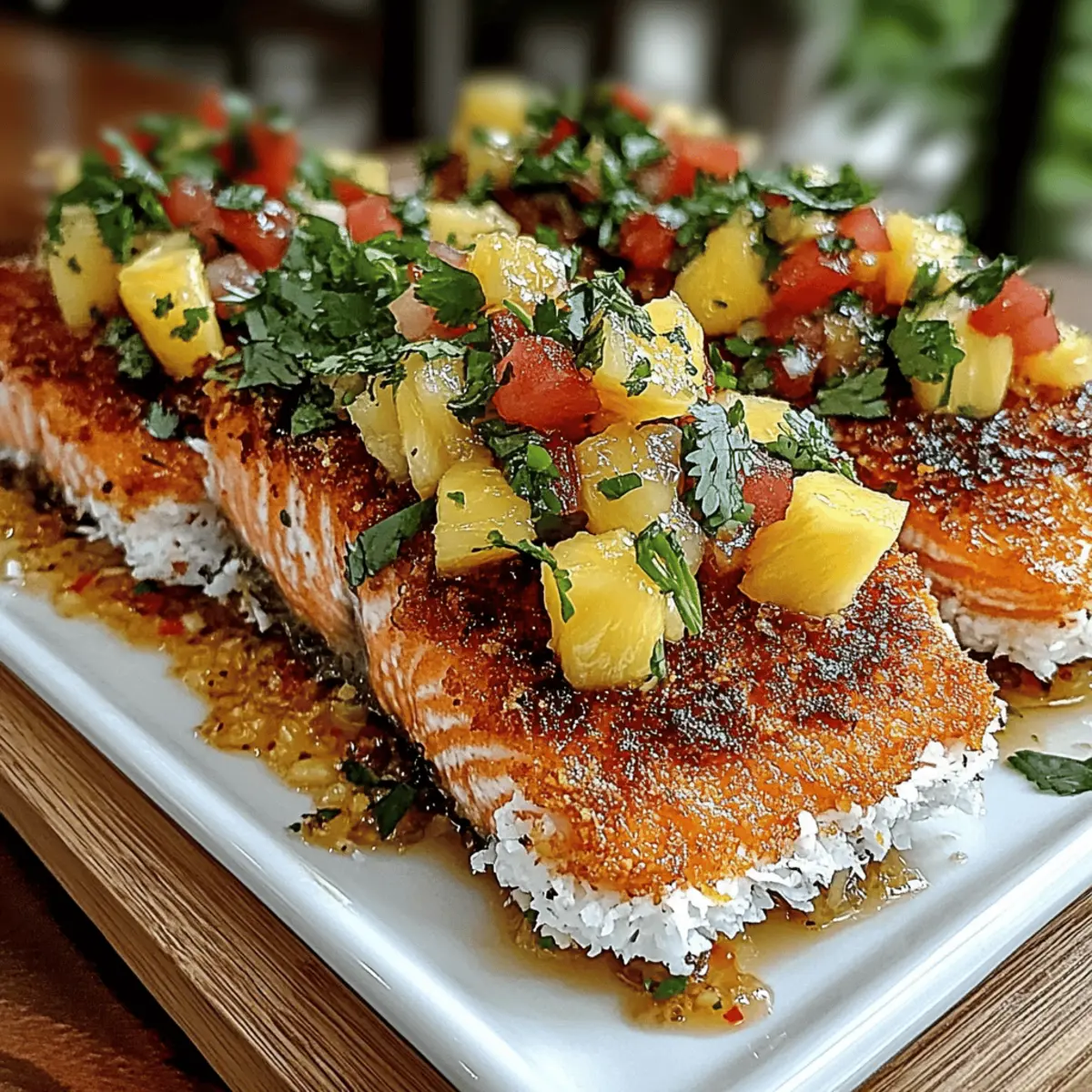
What to Serve with Coconut Crusted Salmon with Pineapple Salsa
Elevate your dining experience with complementary dishes that enhance the tropical flavors and textures of your meal.
-
Coconut Rice: The subtle sweetness of coconut rice beautifully complements the salmon, making each bite a delightful tropical escape. Its creaminess balances the crunchy salmon crust perfectly.
-
Steamed Asparagus: Crisp-tender asparagus adds a bright green contrast and a hint of earthiness, grounding the dish while keeping it light and healthy. Toss with lemon for extra zest!
-
Quinoa Salad: A refreshing quinoa salad with cucumber, cherry tomatoes, and a light vinaigrette adds a nutty flavor and fluffy texture that pairs wonderfully with the rich salmon. The colors will pop on your plate!
-
Mango Avocado Salsa: Swap in a mango avocado salsa for a creamier texture and tropical spark. The richness of the avocado contrasts beautifully with the pineapple salsa’s acidity.
-
Garlic Roasted Potatoes: Crispy garlic roasted potatoes bring savory comfort to the table, providing a hearty side that complements the lightness of the salmon without overwhelming it.
-
Chilled Sauvignon Blanc: A chilled glass of Sauvignon Blanc enhances the dish’s tropical notes, refreshing your palate and bringing balance to the meal.
-
Lime Sorbet: Finish your meal on a refreshing note with lime sorbet. Its tangy sweetness echoes the flavors of the salsa while cleansing your palate.
Indulging in these pairings will not only satisfy your hunger but also create a vibrant culinary experience that lingers long after the last bite.
Storage Tips for Coconut Crusted Salmon
Fridge: Store leftover Coconut Crusted Salmon in an airtight container for up to 2 days. This will keep it fresh while you ponder what to make next.
Freezer: For longer storage, wrap the salmon tightly in plastic wrap and aluminum foil, then place in a freezer-safe bag. It will stay good for up to 3 months.
Reheating: To enjoy your salmon again, reheat it in the oven at 350°F (175°C) for about 10-15 minutes or until warmed through. This method will help maintain the crispiness of the coconut crust.
Salsa Storage: Keep pineapple salsa in a separate airtight container in the fridge for up to 3 days. Note that the salsa may lose some texture over time, so enjoy it fresh for the best taste!
Make Ahead Options
These Coconut Crusted Salmon with Pineapple Salsa are perfect for busy home cooks looking to save time! You can prepare the pineapple salsa up to 24 hours in advance by dicing all the ingredients and mixing them in a bowl—just make sure to refrigerate it in an airtight container to keep it fresh. Additionally, you can bread the salmon fillets up to 3 hours before cooking; simply coat them and place on a baking sheet lined with parchment paper, covering them tightly with plastic wrap to maintain that crunchy texture. When you’re ready to enjoy this flavorful dish, just bake or fry the salmon as instructed, and you’ll have a delicious, tropical dinner ready in no time!
Coconut Crusted Salmon with Pineapple Salsa Variations
Feel free to get creative with this Coconut Crusted Salmon with Pineapple Salsa! Here are some fun ideas to personalize your dish even further.
- Vegan Option: Substitute salmon with firm tofu, marinating it briefly in lime juice for added flavor.
- Creamy Addition: Add diced avocado to the pineapple salsa for a rich, creamy twist that complements the salmon beautifully.
- Fruit Swap: Try using ripe mango or papaya in your salsa instead of pineapple for a delightful change of tropical scenery.
- Herb Twist: Experiment with fresh mint or basil in place of cilantro for a refreshing herbaceous note that brightens the dish.
- Spice It Up: Increase the heat by adding more diced jalapeño or a pinch of cayenne pepper to the salsa, awakening your taste buds.
- Nutty Flavor: Incorporate toasted chopped macadamia nuts or cashews into the salsa for an added crunch and rich nuttiness.
- Belly-Warming Curry: For an exciting twist, serve the coconut salmon with a side of coconut curry inspired by my Coconut Salmon Curry.
- Crunchy Slaw: Pair your salmon with a zesty mango slaw or a light cabbage salad for a fresh, crunchy texture that completes the meal.
These variations will help you put your personal spin on this dish while keeping the tropical essence alive!
Expert Tips for Coconut Crusted Salmon
- Pat Dry: Ensure salmon fillets are patted dry before breading to help the coconut crust adhere better.
- Fresh Ingredients: Use fresh pineapple and herbs for the salsa to elevate the flavors and aroma significantly.
- Hot Oil: If frying, make sure the oil is hot enough; this prevents the crust from becoming soggy and achieves that desired crispiness.
- Avoid Overcrowding: If frying, don’t overcrowd the skillet; this helps maintain the temperature and allows for even cooking.
- Adjust Heat Level: If you enjoy a little spice, include the jalapeño in the salsa, or increase the amount for more kick!
Enjoy your delightful Coconut Crusted Salmon with Pineapple Salsa!

Coconut Crusted Salmon with Pineapple Salsa Recipe FAQs
How do I choose ripe salmon for this recipe?
Absolutely! When selecting salmon, look for fillets that are moist, have a vibrant color, and smell fresh, like the ocean. Avoid salmon with dark spots or a strong fishy odor, as these are signs of spoilage. If possible, choose wild-caught salmon for the best flavor and nutrition!
What’s the best way to store leftover Coconut Crusted Salmon?
Store any leftover Coconut Crusted Salmon in an airtight container in the refrigerator for up to 2 days. Make sure it’s cooled to room temperature before sealing. This helps retain the flavors and moisture, but for the crispiest results, reheat gently in the oven.
Can I freeze Coconut Crusted Salmon?
Yes! If you want to freeze your Coconut Crusted Salmon, wrap each fillet tightly in plastic wrap, then again in aluminum foil to prevent freezer burn. Place the wrapped fillets in a freezer-safe bag and they will last up to 3 months. When you’re ready to eat, thaw them overnight in the refrigerator and reheat in the oven for the best texture.
What should I do if my coconut coating isn’t sticking?
If you find the coconut coating isn’t sticking to your salmon, make sure to pat the fillets dry before you start the breading process. Also, using a good amount of egg wash helps the coconut adhere better. If you’re still having trouble, you might try letting the breaded fillets rest for about 15 minutes before cooking—they can develop a nicer crust this way!
Is Coconut Crusted Salmon safe for those with nut allergies?
Good question! The Coconut Crusted Salmon is gluten-free, especially when using gluten-free breadcrumbs, but it does contain coconut. If you have a nut allergy, be sure to confirm that you don’t have a coconut sensitivity, as coconut is categorized as a fruit, not a nut.
How long does pineapple salsa last in the fridge?
You can store your pineapple salsa in a separate airtight container for up to 3 days. To keep it tasting fresh, enjoy it as soon as possible since the texture may change over time. If you want to jazz it up, adding some diced avocado just before serving can give your salsa a creamy twist!
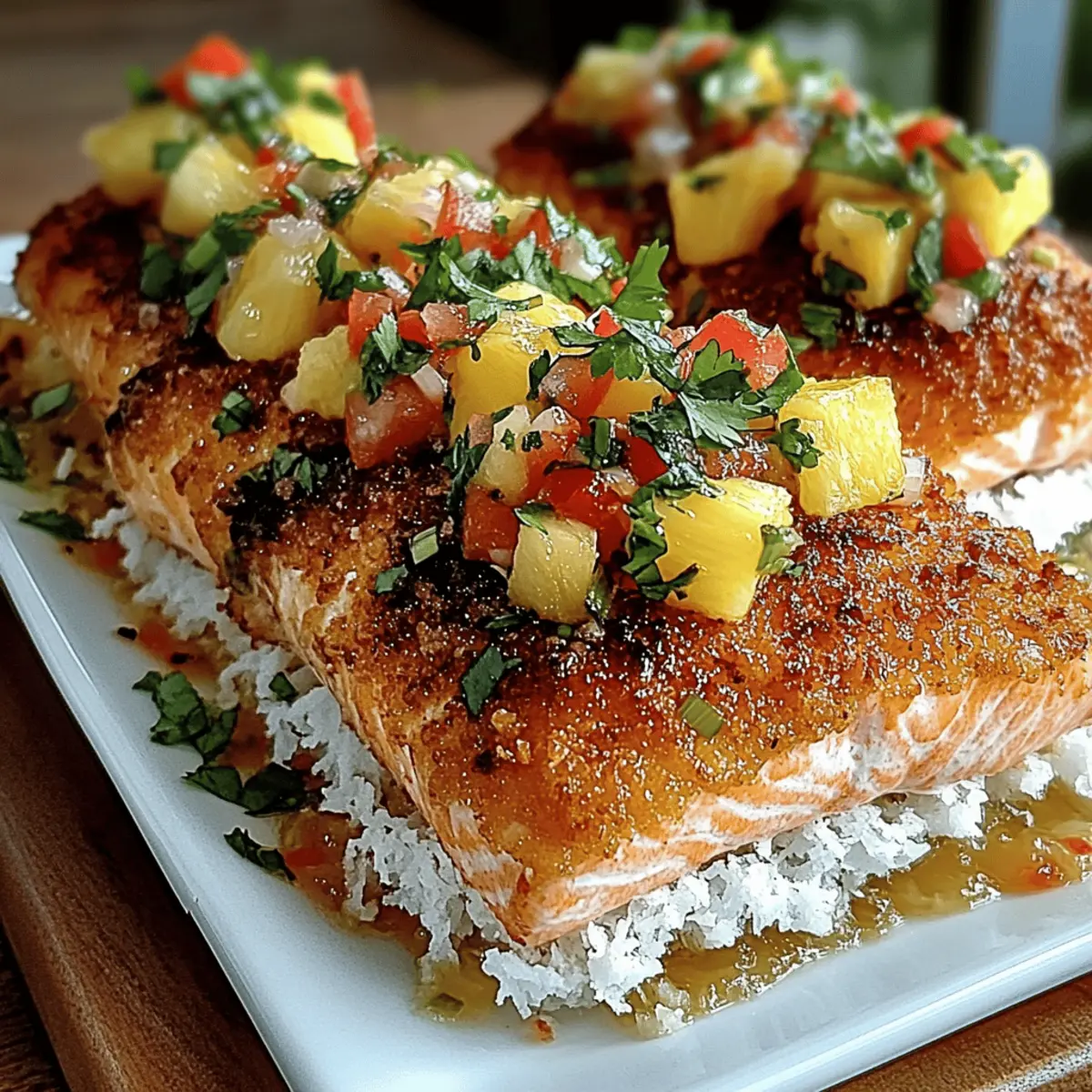
Coconut Crusted Salmon with Pineapple Salsa: A Tropical Delight
Ingredients
Equipment
Method
- Prepare the Pineapple Salsa by dicing fresh pineapple, red bell pepper, and red onion, then finely chop the jalapeño if using. Mix all ingredients and add lime juice. Season with salt, and let sit for 15-20 minutes.
- Preheat your oven to 400°F (200°C) for baking or heat a large skillet over medium heat with coconut oil.
- Set up a breading station with all-purpose flour (or cornstarch), beaten eggs, and a mixture of shredded coconut and panko breadcrumbs.
- Pat each salmon fillet dry, dredge in flour, dip in eggs, and coat with the coconut-panko mixture.
- Cook salmon in the oven for 12-15 minutes or in the skillet for 4-5 minutes on each side until golden brown.
- Serve salmon topped with pineapple salsa for a vibrant presentation.
Leave a Reply