
The sizzling sound of marinated beef hitting a hot skillet evokes memories of vibrant Korean markets, where every bite tells a story. Today, I’m excited to share my recipe for Korean Beef Lettuce Wraps, a delightful mix of fresh ingredients and flavors that come alive with each crunch. This dish is not only low-carb but also a wonderful option for meal prep—perfect for busy weeknights or impressing friends at a casual gathering. The bulgogi-style marinated steak offers a perfect balance of sweet and savory, nestled in crisp lettuce and topped with colorful veggies. Trust me, you’ll love how easy and satisfying these wraps are. Ready to transform your weeknight dinners into a culinary adventure? Let’s dive in!
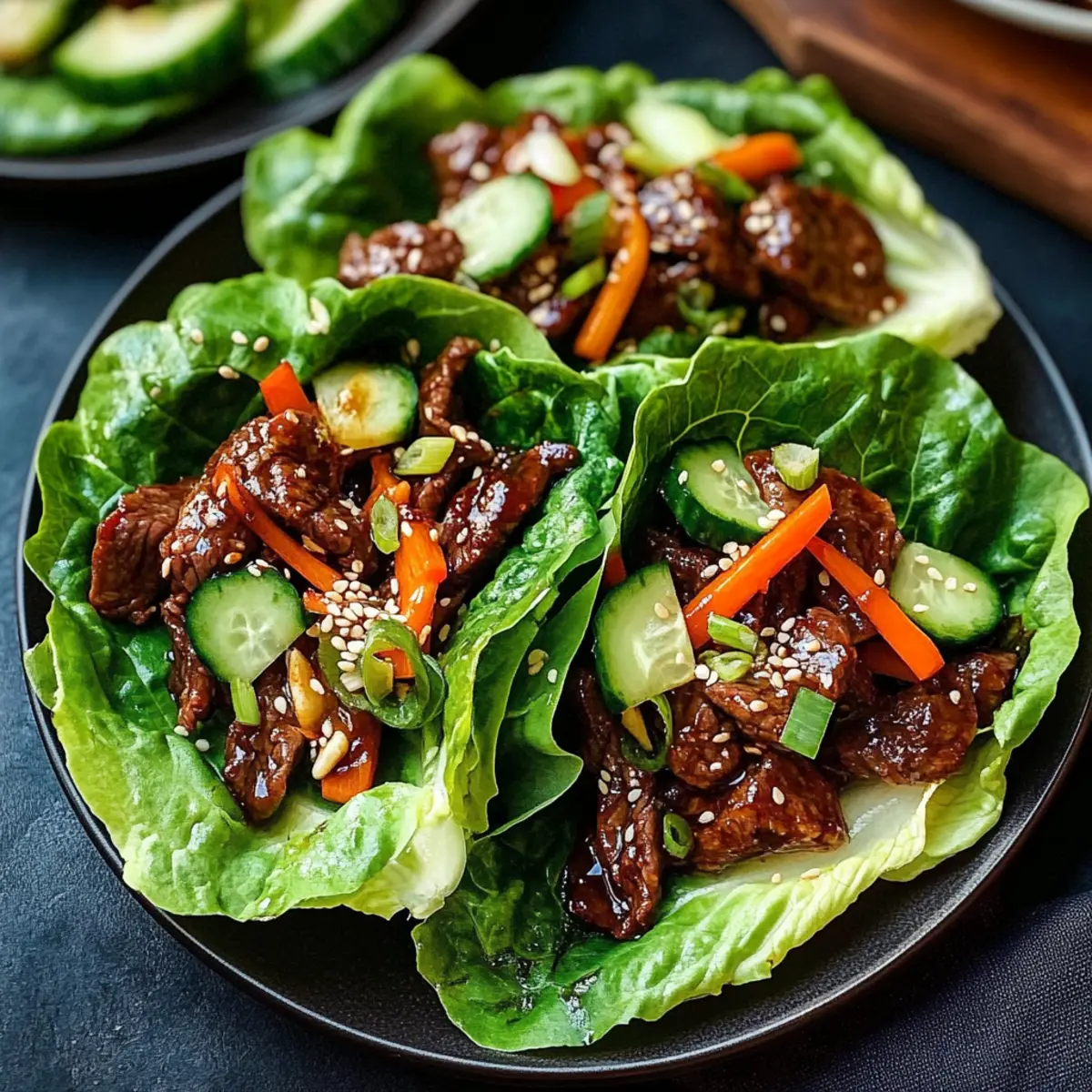
Why You’ll Crave These Wraps
Bold flavors emerge as the marinated beef sizzles to perfection, capturing the essence of a traditional Korean dish. Quick prep makes these wraps ideal for busy weeknights, offering you a healthy meal in no time. Versatile ingredients allow substitutions, enabling you to personalize each wrap to your taste. Crowd-pleasing appeal means these are great for gatherings, sure to impress family and friends. Plus, low-carb joy means you can indulge without the guilt. Pair with my Savory Ground Beef for more delicious options!
Korean Beef Lettuce Wraps Ingredients
These ingredients will help you create mouthwatering Korean Beef Lettuce Wraps!
For the Beef Marinade
- Sirloin or Ribeye Steak – Provides savory protein; pre-sliced beef can be used if cut against the grain.
- Dark Soy Sauce – Adds depth and umami; substitute with regular soy sauce for a lighter flavor.
- Gochujang Paste – Introduces sweet and spicy notes; adjust the quantity for your favorite heat level.
- Fresh Ginger (minced) – Enhances flavor complexity; ginger powder is a suitable substitute in lesser quantity.
- Light Brown Sugar – Balances the spice with sweetness; honey or palm sugar can work as substitutes.
- Mirin – Adds sweetness and slight acidity; can replace with a mix of rice vinegar and sugar.
- Garlic (minced) – Brings aromatic flavor; use garlic powder as a quick substitute if needed.
- Freshly Ground Black Pepper – Seasoning essential; omit if avoiding spice.
- Sweet Apple (grated) – Adds natural sweetness and moisture; pear can be used or omit for a different twist.
- Toasted Sesame Oil – Provides a nutty finish; other neutral oils can be used, but flavor will vary.
For Assembly
- Romaine or Butter Lettuce – Forms the wraps; choose large, sturdy leaves for best results.
- Carrot (sliced into thin strips) – Offers a crunchy texture; zucchini is a low-carb alternative.
- Cucumber (chopped) – Gives fresh crunch; bell pepper can be a delightful substitute.
- Red Bell Pepper (deseeded, diced) – Adds sweetness and texture; any variety of bell pepper is fine.
- Spring Onions (thinly sliced) – For garnish and added flavor; chives can replace if needed.
Optional Toppings
- Sesame Seeds – Adds a nutty flavor; great as a garnish.
- Unsalted Peanuts (toasted and roughly chopped) – For crunch; can be omitted or swapped with sunflower seeds for a nut-free option.
Step‑by‑Step Instructions for Korean Beef Lettuce Wraps
Step 1: Prepare the Steak
Start by placing your sirloin or ribeye steak in the freezer for about 30 minutes. This will make it easier to slice. After chilling, remove the steak and thinly slice it against the grain. Aim for strips about 1/4 inch thick. The right cut is crucial for tender bites in your delicious Korean Beef Lettuce Wraps.
Step 2: Marinate the Beef
In a medium bowl, combine the sliced steak with dark soy sauce, gochujang, minced ginger, light brown sugar, mirin, minced garlic, freshly ground black pepper, grated apple, and toasted sesame oil. Mix well until every piece is coated. Cover the bowl and let the beef marinate in the refrigerator for 3-4 hours, allowing those bold flavors to meld beautifully.
Step 3: Cook the Beef
Heat a large skillet over medium-high heat and add a splash of neutral oil. Once hot, remove the marinated beef from the refrigerator and let any excess marinade drip off. In batches, stir-fry the beef for about 5 minutes until it’s fully cooked and caramelized, stirring frequently. The sizzling sound and fragrant aroma will signal that your Korean Beef Lettuce Wraps are coming together!
Step 4: Assemble the Wraps
Prepare a platter by laying out your washed and dried lettuce leaves. Assemble the wraps by placing a generous portion of bulgogi beef in each lettuce leaf. Then, add thin strips of carrot, chopped cucumber, and diced red bell pepper for a rainbow of color and crunch, finishing with a sprinkle of thinly sliced spring onions.
Step 5: Serve Immediately
Once your wraps are assembled, they are best enjoyed right away for optimal crunch. If desired, garnish with sesame seeds and chopped peanuts for added texture and flavor. Gather your family and friends around the table to share these delightful Korean Beef Lettuce Wraps, making your meal a wholesome, shared experience.
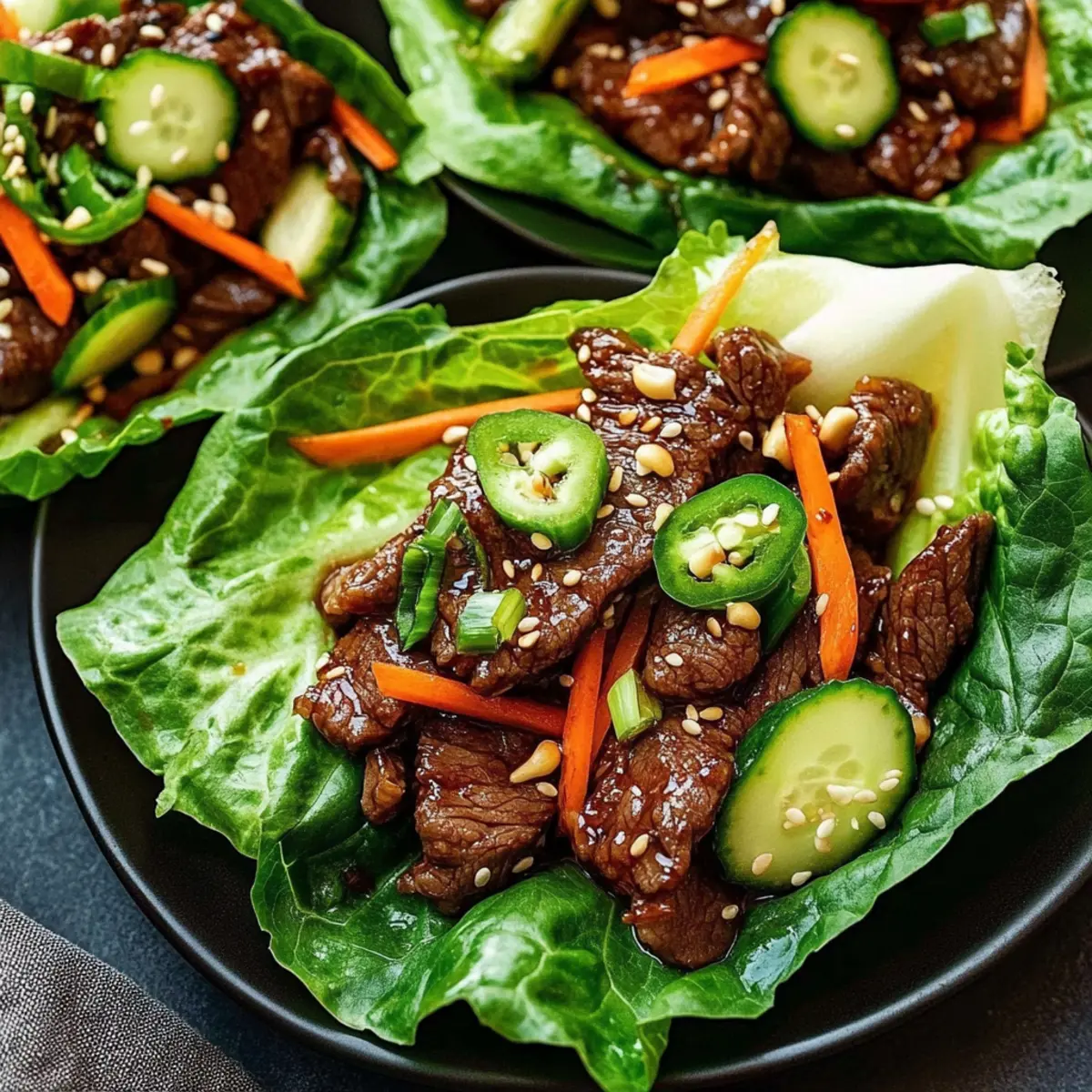
How to Store and Freeze Korean Beef Lettuce Wraps
Fridge: Store cooked bulgogi beef in an airtight container in the refrigerator for up to 3 days. This way, you can enjoy these delicious wraps multiple times throughout the week!
Freezer: If you want to freeze the marinated beef, place it in a freezer bag, ensuring to remove excess air. It can be frozen for up to 3 months. Thaw overnight in the fridge before cooking.
Reheating: When ready to eat, reheat the beef in a skillet over medium heat until warmed through, then assemble your wraps fresh with lettuce and veggies to maintain texture.
Assemble Fresh: For the best taste and texture, assemble the Korean Beef Lettuce Wraps just before serving, using fresh lettuce and vegetables for that ultimate crunch!
Make Ahead Options
These Korean Beef Lettuce Wraps are perfect for meal prep, saving you time on busy weeknights! You can marinate the bulgogi-style steak up to 24 hours in advance; just combine the sliced beef with all marinade ingredients and refrigerate. For even more convenience, pre-chop your vegetables like carrots, cucumbers, and bell peppers, and store them in airtight containers in the fridge for up to 3 days. When you’re ready to serve, simply stir-fry the marinated beef and assemble the wraps with your fresh veggies. This way, you will enjoy tasty, crisp Korean Beef Lettuce Wraps with minimal effort, just as delicious as if made fresh!
Expert Tips for Korean Beef Lettuce Wraps
-
Slice Correctly: Ensure to slice the steak thinly against the grain for optimal tenderness; this is the key to delicious Korean Beef Lettuce Wraps.
-
Marination Time: Allow the beef to marinate for at least 3-4 hours for the best flavor; don’t exceed 24 hours to maintain texture.
-
Adjust Heat Levels: Feel free to modify the amount of gochujang based on your heat preference; start small and add more for a kick.
-
Prep Ahead: You can prep the marinated beef a day in advance to save time, but cook it fresh for the best flavor and texture.
-
Wrap Selection: Use large, sturdy lettuce leaves like Romaine or Butter lettuce to hold all the flavorful fillings without tearing.
What to Serve with Easy Korean Beef Lettuce Wraps
Transform your delightful Korean beef lettuce wraps into a full culinary experience with these perfect pairings.
- Fragrant Jasmine Rice: A fluffy jasmine rice side balances the wraps, soaking up any leftover sauces.
- Spicy Kimchi: This tangy, fermented dish adds a punch and complements the savory sweetness of the beef.
- Crisp Asian Slaw: A crunchy slaw with a sesame dressing enhances the freshness while adding vibrant color to your plate.
- Sizzling Stir-Fried Vegetables: Stir-frying seasonal veggies like bell peppers and snap peas offers a colorful side infused with umami flavor.
- Cool Cucumber Salad: Light and refreshing, this dish contrasts the warm, savory beef with a zesty vinegar dressing for balance.
- Sweet Potato Fries: The natural sweetness of baked sweet potato fries pairs beautifully, bringing a comforting crunch to the table.
- Mango Salad: A tropical mango salad with lime and mint brightens the meal, adding a refreshing zing to every bite.
- Chilled Sake or Green Tea: Savor these beverages for a traditional touch, their delicate flavors enhancing your culinary experience.
- Chocolate Mochi for Dessert: Finish your meal with these chewy, sweet treats that are light enough yet satisfy your sweet tooth.
Korean Beef Lettuce Wraps Variations
Feel free to personalize these wraps with your favorite ingredients to suit your taste!
-
Ground Beef: Substitute sliced steak with ground beef or turkey for a different texture and flavor.
-
Vegetarian Delight: Swap the beef for marinated tofu or tempeh, offering a nutritious plant-based option. It will still carry those delightful flavors and textures.
-
Spicy Kick: Add extra gochujang or a sprinkle of red pepper flakes for those who crave a bolder heat level in their wraps.
-
Garlic Lovers: Intensify the garlic flavor by adding fresh chopped garlic as a topping; it’s a great flavor enhancer!
-
Nutty Variation: Replace peanuts with sunflower seeds or pumpkin seeds for a nut-free alternative, while still adding that satisfying crunch.
-
Flavorful Leaf Change: Experiment with different leafy greens, like butter lettuce or even cabbage, for unique textures and presentations.
-
Fruity Twist: Add mango or pineapple chunks for a sweet and tangy twist that brightens up the flavor.
-
Herbaceous Boost: Toss in some fresh cilantro or mint for an aromatic finish that elevates the dish to a whole new level of freshness.
These easy variations cater to every palate, ensuring your Korean Beef Lettuce Wraps remain exciting and satisfying! For more tasty ideas, check out my Savory Roast Beef and Sweet Spicy Korean recipes!
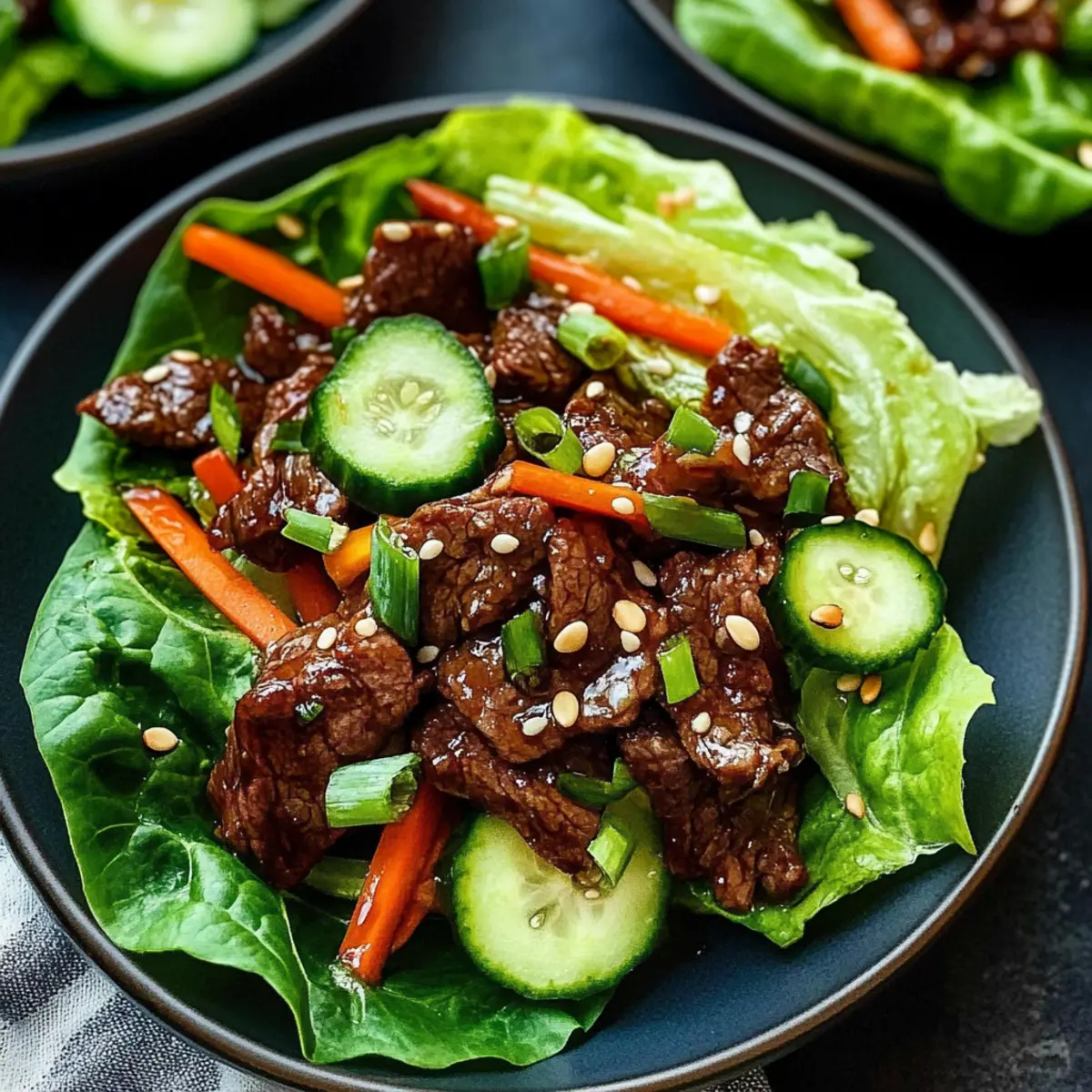
Korean Beef Lettuce Wraps Recipe FAQs
What beef cuts work best for these wraps?
I recommend using sirloin or ribeye steak for a tender texture that’s perfect for Korean Beef Lettuce Wraps. However, if you’re short on time, pre-sliced beef can be used as long as it’s cut against the grain!
How should I store leftovers?
Store any cooked bulgogi beef in an airtight container in the refrigerator for up to 3 days. This way, you’ll have a quick, delicious meal ready for busy nights! Just remember, the wrapped lettuce should be assembled fresh to maintain that delightful crunch.
Can I freeze the marinated beef?
Absolutely! To freeze, place the marinated beef in a freezer bag, making sure to remove any extra air. It can be stored in the freezer for up to 3 months. When you’re ready to cook, just thaw it overnight in the fridge and you’re all set for a quick meal!
What if I can’t find gochujang paste?
If gochujang isn’t available, you can substitute it with a mix of chili paste and a little sugar for sweetness. Adjust the quantity to achieve your preferred level of spice! This still gives your Korean Beef Lettuce Wraps that delightful flavor!
What type of lettuce is best for wraps?
For the ultimate crunch, I suggest using larger, sturdy leaves like Romaine or Butter lettuce. These varieties hold up well with all the tasty fillings. If you’re feeling adventurous, try using cabbage leaves for a different texture!
Are these wraps pet-friendly?
While the ingredients used in Korean Beef Lettuce Wraps are generally safe for people, they may not be acceptable for pets, especially ingredients like garlic and certain sauces. It’s best to avoid sharing these wraps with your furry friends!
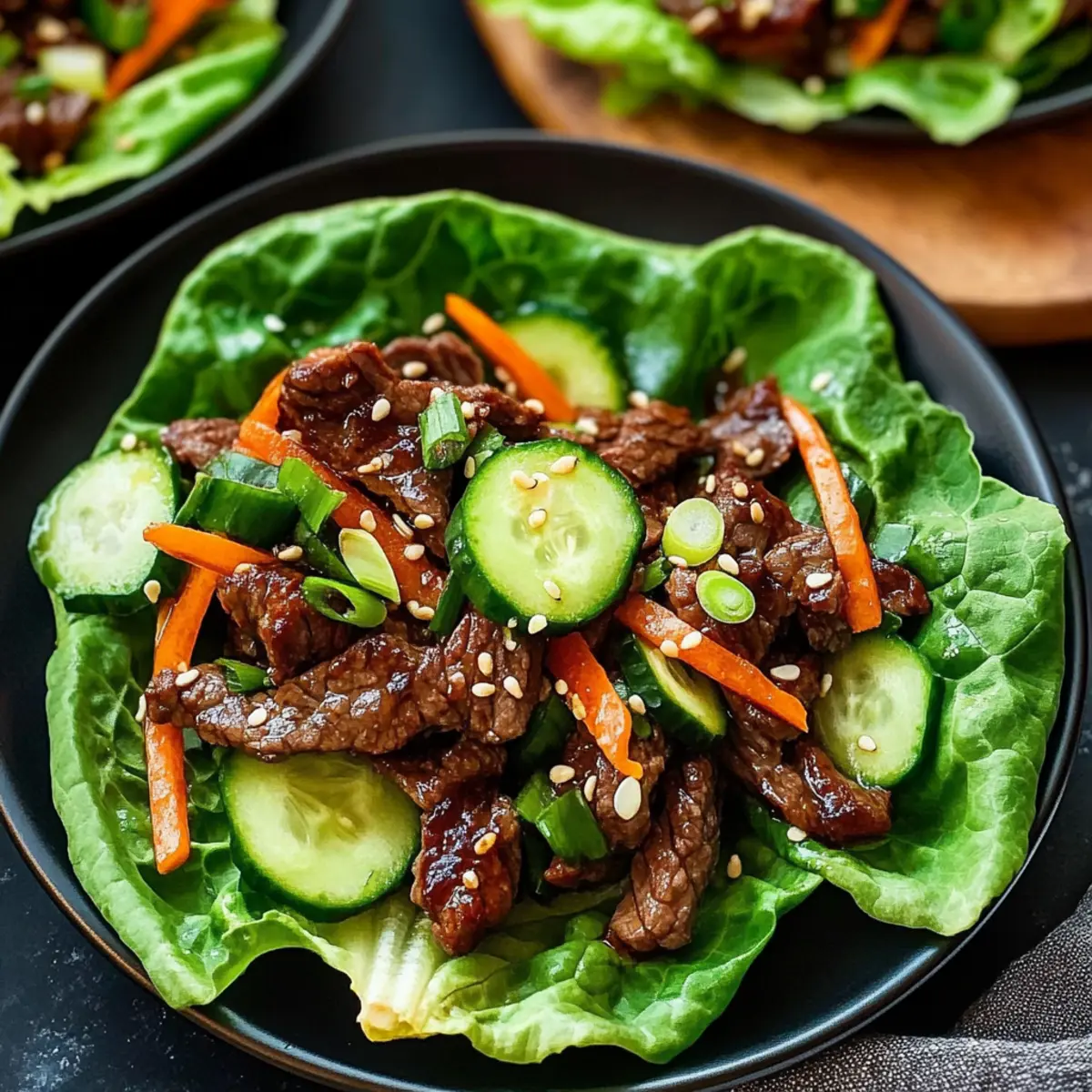
Savory Korean Beef Lettuce Wraps for a Quick and Healthy Meal
Ingredients
Equipment
Method
- Step 1: Prepare the Steak - Place your steak in the freezer for about 30 minutes. Slice it thinly against the grain into strips about 1/4 inch thick.
- Step 2: Marinate the Beef - Combine the sliced steak with the marinade ingredients in a bowl. Cover and let marinate in the refrigerator for 3-4 hours.
- Step 3: Cook the Beef - Heat a skillet over medium-high heat, stir-fry the marinated beef in batches for about 5 minutes until cooked and caramelized.
- Step 4: Assemble the Wraps - Lay out lettuce leaves, fill with bulgogi beef, carrot, cucumber, red bell pepper, and spring onions.
- Step 5: Serve Immediately - Garnish with optional toppings and enjoy the wraps fresh for optimal crunch.
Leave a Reply